I wrote a few months ago about the so-called ‘quiet revival,’ which I argued is neither quiet nor a revival, but perhaps evidence of a reaction to the meaning crisis, or to sound incredibly pretentious, a metamodern turn.
I was more positive about the reaction to the meaning crisis than about the metamodern turn. The first is searching for solidity in a world that’s liquid. The second is vibes all the way down.
Now, the Bible Society who published the original research and gave the phenomenon its name, have retracted it. There are a series of errors in the research, conducted for them by a reputable polling company, meaning the statistics aren’t accurate. Perhaps that’s not so surprising, the stats were eye-wateringly large, even if we were swept up in the hype.
Many commentators are pointing out that the anecdotal evidence is still strong. Lots of churches read the report and said, “that makes sense because we’ve seen this small local shift, it must be part of this bigger thing.” People were talking about the phenomenon for at least a year before the report was published too, there was a notable shift in the spiritual atmosphere of the nation which fits with similar shifts happening in lots of countries all around the world. There still is a shift, our church has seen an increasing number of people in their 20s exploring Jesus. Our young adults’ group is not large but includes a significant proportion of people who don’t know Jesus choosing to go and sit in a bar and read the Bible together.
The stats might be wrong, but it is a thing. Rhys Laverty’s comment on it for The Critic argues that the rise in numbers and interest being seen in conservative, charismatic, and high church spaces is real. However, you can’t see it reported statistically because its entirely offset by the complete collapse of ‘middle-ground,’ mainline, and liberal churches across the UK. It seems like a convincing argument, whatever growth there may be is then subsumed in the whole by the slow death of a slew of small churches.
This probably misses other parts of the narrative, including that while liberal churches might be dying, there are exceptions, and that some more conservative churches are liberalising in one way or another. Those are observations and I don’t know enough of the whole picture to figure out if they are a trend or not.
That’s the real challenge: our siloed nature means no one can see the whole picture. The ‘middle-ground’ churches that Rhys describes are not ones I’m familiar with. I don’t think about or consider them when talking or writing about Christianity in the UK. It’s only fairly recently that I have, to my pleasant surprise, discovered that there are a number of evangelicals in the Church of England. Who knew?
Before all the Anglicans get hot under their (dog) collars, that’s not really true. I was well aware, but it was a strange phenomenon to me. Why they would chose to stay in the Church of England was a mystery to me. I have a better sense of that having taken the time to ask some people. My actual point is this: I notice that when Anglicans gather they forget the rest of us exist and talk like they’re ‘the church;’ we do roughly the same thing, forgetting in the main that they exist. It’s probably not particularly helpful on either of our parts.
My inability to see the masses of churches that are small and dying, containing some believers I expect, and some who simply attend as part of the pattern of life, means it’s easy to paint a narrative about the nation which isn’t necessarily true. Any shift in the spiritual temperature is largely affecting younger generations and therefore largely affecting the places they congregate (especially cities).
We should check our triumphalism and keep noticing the shift in the air. Some of this is just observing how much easier it is to talk to someone in their 20s about faith; it’s also noting the normalisation of witchcraft in your local Waterstones and the frequency you’ll hear people talk about ‘manifesting’ on the TV. Not every aspect of the vibe shift towards the spiritual is one we should celebrate. It does mean that endless apologetics about evolution are mostly a thing of 20-30 years ago. They sound staid when trotted out now as they aren’t questions most people are considering when approaching the Bible (of course there are exceptions, but we should see them as exceptions).
We always should have been bold in preaching the Bible, in or out of season, but a renewed boldness as the temperature changes is not a bad thing. God is a consuming fire, and we should talk about him like that’s the case.
Ultimately, whether the media are interested in what’s happening in our churches is not that important. The worship of God within our churches is of cosmic importance and will affect all of time. We find ourselves with people attending our churches with little sense of Christianity and a desperate need for deep discipleship. Thirsty people are turning up at the fountain. Let’s give our focus there.
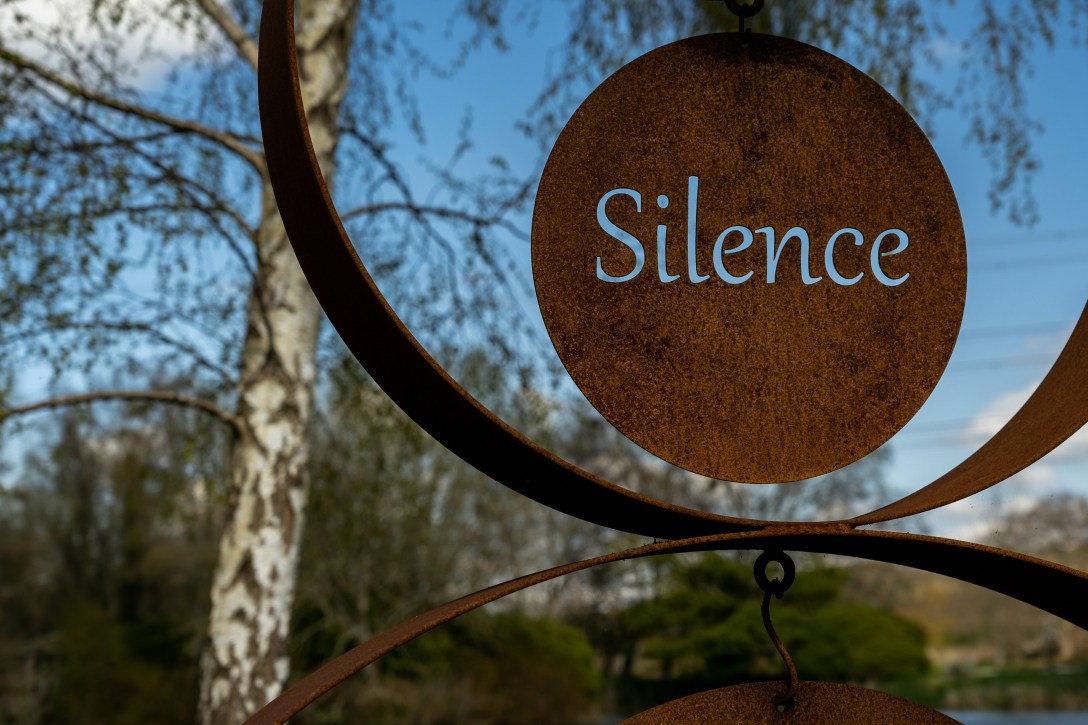
Photo by Nick Fewings on Unsplash
To subscribe and receive email notifications for future posts, scroll all the way to the bottom of the page.
Would you like to support my work? The best thing you can do is share this post with your friends. Why not consider also joining my Patreon to keep my writing free for everyone. You can see other ways to support me here.

