It’s common in evangelical circles for people to talk about ‘going to heaven when they die.’ It’s common in slightly different evangelical circles to politely scoff at that phrase and remind people that the great hope of the Christian faith is the resurrection of the body.
The scoffing isn’t particularly helpful, neither is NT Wright’s take on all of this as though he discovered something unique in the Bible rather than calling for people to return to the faith once for all delivered to the saints.
If you believe in Jesus, you will go to heaven (read: the heavenly temple) when you die. Jesus called it ‘the garden’ (Luke 23) when speaking with one of his compatriots on the cross. We will then wait with him in glory for the eventual resurrection of all things. To scoff at that is pompous.
It’s also true that the Bible’s great hope is the resurrection of dead, and even of the heavens and the earth, for all people (Acts 24). The resurrected dead will then be judged and all will receive what they want: either eternal torment for those who would prefer that to living under Jesus’ rule (sadly, a surprising number of people; this is the nature of a sin sick heart) or life everlasting as heaven meets earth and Christ marries the church for those for whom that is good news.
The resurrection is true hope because its not just bliss in the heavens, it’s the remaking of the world. What I mean by that is its not just good following bad but its bad made into good. This resurrected future is embodied. A disembodied ‘soulish’ future would not as good as an embodied one, because we wouldn’t be whole people.
Theology of the Body
Here’s the thread I’d like to pick at, though it’s an observation that many have made: if the future is embodied, that has implications for our theology of the body.
In other words, modern ideas that your body isn’t fundamentally you but just something you wear to be shed like a cloak, fall apart before the resurrection. Our most fundamental selves include the flesh we’ve been gifted, and we know that because the glorified future also includes the flesh we’ve been gifted. Of course, its different flesh (1 Corinthians 15) and the same flesh (John 20); it will be us glorified. Even that grammar points in the wrong direction, rather I should say that we will be us glorified.
This helps with our theology of the body. Our freedom to change our bodies, whether due to dysphoria of one sort or another—and there are other kinds than gender dysphoria—often rests on the assumption that our body is not fundamentally us. It is, therefore, reasonable to change the body to match the fundamental sense of ourselves we have ‘inside’ our souls. If, instead, we deny that it is reasonable to think of someone apart from their body, then when there is a disconnect between our sense of ourselves and the gifts of our bodies, we lament the brokenness of the world, we comfort and care for people who are so struggling, but we do not affirm that the ‘you inside’ is more real than the experienced reality of your body.
There’s a connection here to the social imaginary, the grand story that society tells itself about itself. It used to be a transcendent story; in essence the Bible’s imaginary ruled the psyche for centuries. It became in the enlightenment an immanent story, one that no longer originates outside of us but comes from within us instead. In an immanent frame it is natural and reasonable to start with the sense of yourself in your soul and project outwards. In a transcendent frame it is natural and reasonable to assume that gifts from above—from outside of us—define reality and our internal felt disconnect from that reality means the problems lies not with reality but with our reception of it.
Both what we think the future holds (our telos) and what we think the story we live on is (our imaginary) dictate how we receive the world and understand our being within it.
The challenge to our stories
My, perhaps controversial, suggestion is this: the eclipse of resurrection as the future of the world within evangelicalism and the acceptance within evangelicalism of gender ideology are linked realities.
I’m not actually suggesting that one leads to the other. It’s a plausible story: as we start to think of the future as disembodied, we lose the understanding of the importance of our bodies. However, I don’t think it worked like that. Rather, I think that both are symptoms of a much bigger malaise.
If I wanted to be dramatic, I’d call it ‘the malaise of modernity,’ but Charles Taylor has already written that book. It’s a symptom of the rewriting of our stories into an immanent, or flat, story where what we see is basically what is and humans are really brains on sticks as its only what the brain perceives (in a very particular, limited, sense of that sentence) that is real. As we’ve come to accept an imaginary that makes us approach the world in a particular way we miss certain things in the Bible because they make less sense to us.
The antidote isn’t more NT Wright, it’s more Augustine. Reading with the richness of the ages will help us hold tight to the faith as delivered to the saints. It’s tempting to jump for a transcendent frame to replace our immanent one, perhaps joining Hans Boersma in his sacramental view of the world where every thing is a window to ultimate reality. There is much truth there I think, whether or not you want to imbibe the Platonism. We should at the same time accept the caution of Kevin Vanhoozer who would rather we have an eschatological frame: everything isn’t a sacrament, but everything does point beyond itself to the story of the world.
I suspect the truth is somewhat orthogonal, where both symbol and story rule the world. Either way, when we consider the body and its use what will ultimately be important is what we think the story we live in is.
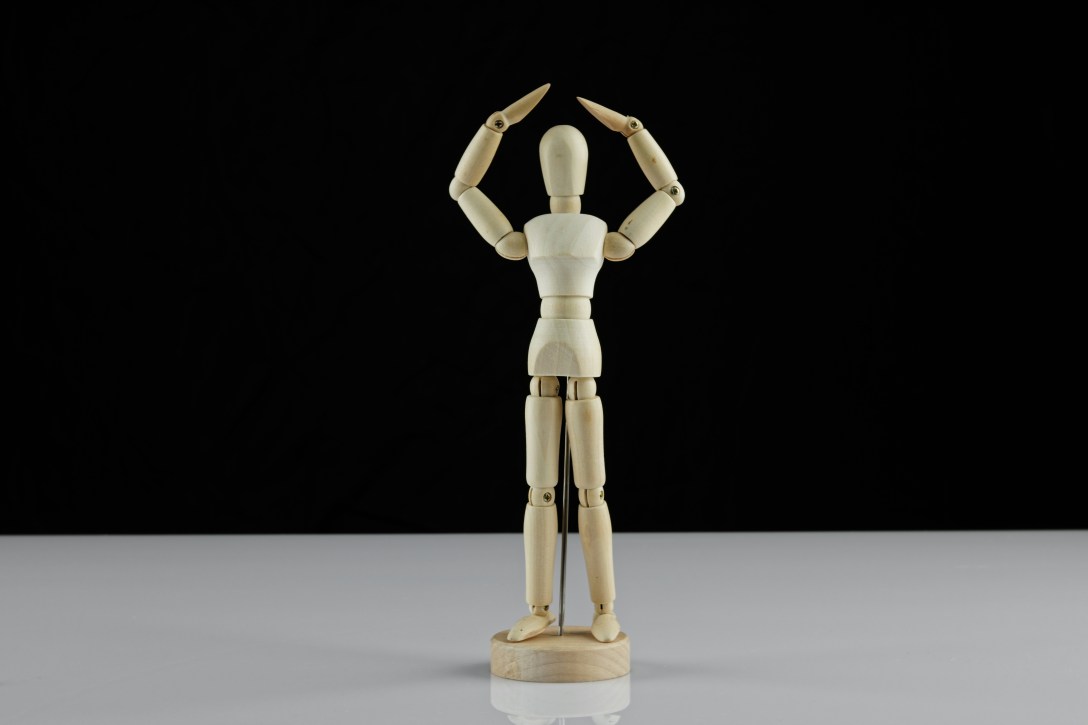
Photo by engin akyurt on Unsplash
To subscribe and receive email notifications for future posts, scroll all the way to the bottom of the page.
Would you like to support my work? The best thing you can do is share this post with your friends. Why not consider also joining my Patreon to keep my writing free for everyone. You can see other ways to support me here.
 nuakh
nuakh 