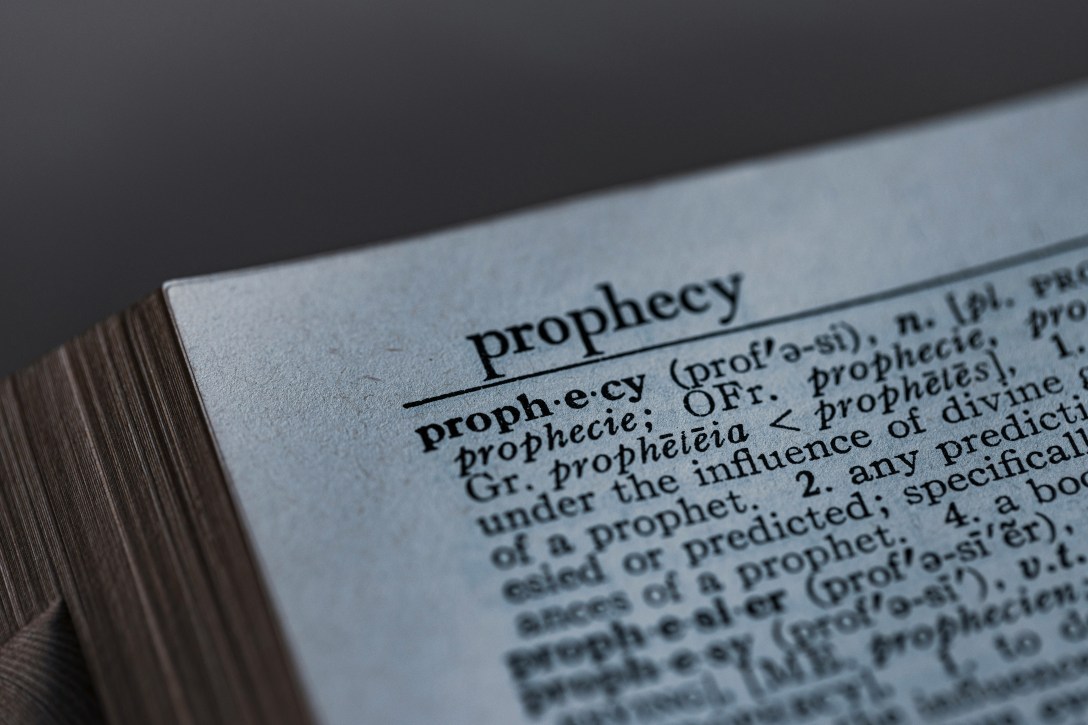
As I write the recent revelations about Shawn Bolz—the Bethel church associated ‘Prophet’ who engaged in serial sexual misconduct and deliberately researched people so he could ‘accurately’ prophesy into their lives—are doing the rounds.
I’m a charismatic, I think the gift of prophecy continues and should be eagerly sought (1 Corinthians 14). I wasn’t familiar with Bolz before these revelations, I would generally see what Bethel put out as at absolutely the opposite end of the charismatic spectrum to my own world, but it still has plenty of influence on some I know.
Obviously, we need to clearly decry any within our own circles who either engage in sexual misconduct (including reporting to the police when relevant) or who use prophecy as a cover for manipulation. I hope I don’t need to write a post on that. Slightly closer to home is the temptation to not deal with allegations ‘for the sake of the ministry’ as I think all corners of the Christian world can have this particular temptation: realistically we need to keep front and centre that the Church will be victorious because of her Lord rather than our ‘ministry.’ However difficult it might be, we have to build churches and institutions that expose their own mistakes as swiftly as possible.
What I’d like to briefly explore is how we ensure that we seek prophecy without falling into the sort of temptations that, presumably, led Bolz to search people on Facebook beforehand so he could read out their addresses. I think the short answer is we have to keep humility central. Here’s a few examples of what I mean by that:
‘Thus Sayeth the Lord!’
Don’t do this. New Testament prophecy is not Old Testament prophecy. Instead ‘I think the Lord might be saying’ gives the person receiving the word an appropriate sense of its weight: you might be wrong, the Bible is what they should test it against, they are encouraged to weigh what you’ve said.
Even if you’re fairly experienced and you’re pretty sure, we give appropriate weight to things for the benefit of the person receiving it: ‘I see this image and have this word and wonder if it might mean…’
Be careful in application
I’ve had numerous occasions when someone gives me a word that feels like they’ve been listening in on a private conversation, they say a sentence that exactly fits something I’ve been thinking about. Then they go on to apply this to me in a way which is completely opposite of what that first sentence would have meant if they’d been listening to my conversation. What I think is happening is they’ve heard something from Jesus but are then applying that themselves. They may not know the difference in their own head—which is something else to watch for carefully—but the difference is important. We need to distinguish ‘I hear God saying x’ from ‘I wonder if it means y.’
Talk your prophecy over with the person
What landed with them? I learn to discern the difference between the Lord’s voice and my own thoughts by asking someone which bits of what I said were helpful. Often the answer isn’t ‘all of it’ and I encourage them to ignore the bits that weren’t.
Don’t call yourself a Prophet
And run away from anyone who does so. It’s almost always a sign of pride rather than humility. While Ephesians 4 does suggest that we can call people Prophets today rather than just those with prophetic gifts, I would suggest that these operate in Ephesians 4 teams that serve multiple churches: so the signs are the ecclesial recognition, the serving of multiple churches, being named by others already serving in that role, and the collaboration with apostles, evangelists, teachers, and shepherds.
Even those so named are unlikely to want to own the title. Humility is the primary virtue you’re looking for.
Stick close to the Bible
Because honestly if you declare true things from the Bible to someone while praying then whether you heard it from the Lord as applied in this specific situation, or not, then you’re doing them good. Prophecy is primarily the Bible applied in very specific ways that open up a situation in someone’s life.
Be wary when you know their story
My experience is that the more you know of someone the harder it is to prophecy into their lives because the more you have an opinion of what you think wisdom is for them. In these instances, we need to check ourselves more carefully and perhaps stick clearer to ‘God pointed me to this verse’ or ‘I can see this picture’ so that the person does more application themselves.
Also, tell them your wisdom such as it is, but make it clear that’s what you’re doing.
Work in team
Clarity usually comes as people work on a particular word with other prophetic people. Someone brings something, someone else clarifies or agrees or contradicts. The prophetic gift is no longer given to the individual but to the church (that’s an overstatement, but that’s the broad Old Testament to New Testament pattern) so we expect others with prophetic gifts to sharpen our prophecies. Prophets don’t work alone anymore.
Cook the word properly
Most prophetic words are delivered too soon in my opinion. People need to be encouraged that it isn’t cooked yet. If you have a vague impartation, then you need to ask God questions: who is this for? How would you like to apply it? That process might take a few weeks. Or you can shortcut it by sitting with other prophetic people as you can sharpen the word together.
This helps with humility too as it prevents us just saying something that popped into our heads. We’re opposed with spontaneity. It’s overrated: because you heard it from God right now doesn’t mean you have to bring it right now.
Humility is key
Much like in preaching, where rules like ‘don’t tell stories where you’re the hero’ are important, in order to attempt to speak for God (or ‘to speak God’s words after him’ would be more precise) we need to cultivate humility. We will come unstuck if we don’t. Look for character before gifting and then teach people of good character how to fan their gifts into flame.
Photo by Mick Haupt on Unsplash
To subscribe and receive email notifications for future posts, scroll all the way to the bottom of the page.
Would you like to support my work? The best thing you can do is share this post with your friends. Why not consider also joining my Patreon to keep my writing free for everyone. You can see other ways to support me here.
 nuakh
nuakh 