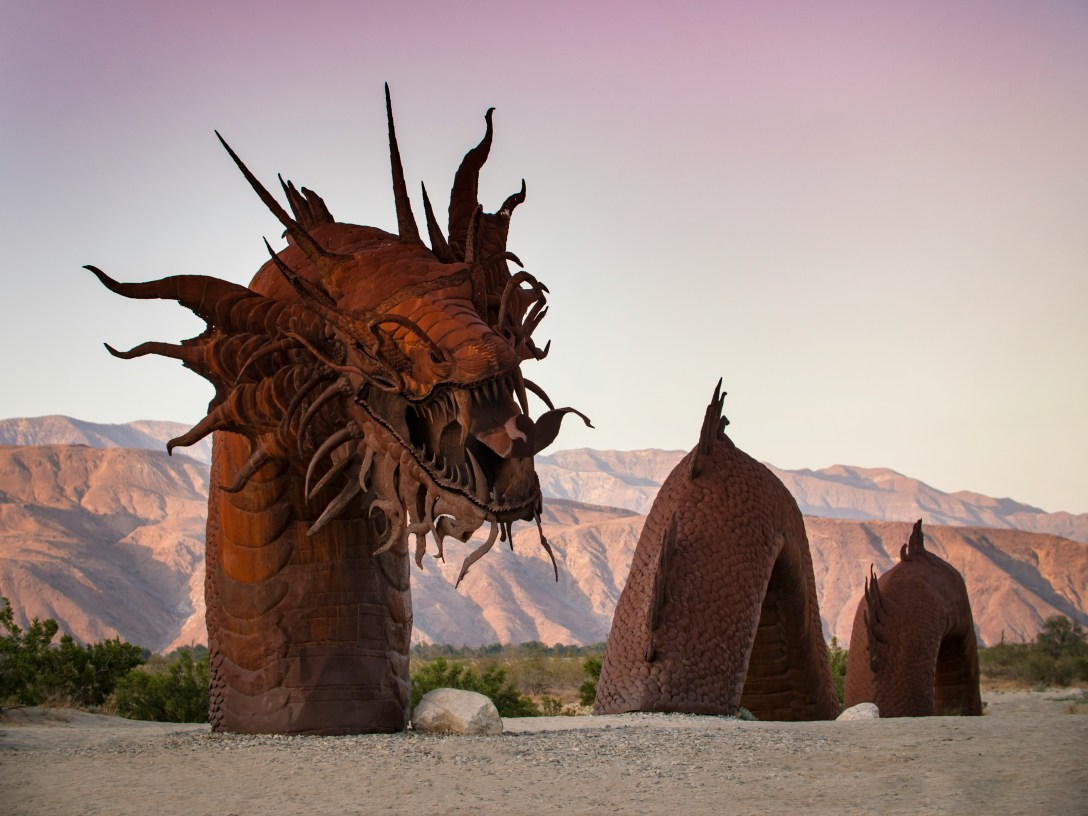
I’ve become enough of a trope of myself that friends quip about how much I talk about dragons. It’s part, apparently, of the trifecta of things I get excited about in the Bible: trees, tables, and dragons. In reality, I’ll rarely mention the word ‘dragon’ in my preaching and I can’t remember the last time I said the word in a pastoral conversation, though they pop up in my blogging often enough.
Mostly I bring them up when reading the Bible with people to help them see the strange visceral reality of the book God has given us.
Even that introduction was carefully worded because I say the word ‘dragon’ rarely, but I’m talking about evil and ‘the powers’ often. They are the same thing.
I chose to write ‘dragons’ for three reasons: it’s surprising and shocks people into wondering about the reality of it; I am still at heart a small boy reading Anne McCaffery’s Dragonriders of Pern; and, it’s the word the Bible uses.
Here be Dragons
We meet dragons first on day 5 of creation, the tannin of the sea. Your translation probably calls them something dull like ‘great sea creatures’ so that you picture whales, but we’re talking about primordial sea monsters that personify chaos. This is the thing that ate Jonah, they are the reason the sea is associated with demons and chaos in the Bible, they are what Leviathan and Rahab (Psalm 74; Psalm 89) are.
On day 5 God made the dragons.
That in itself is quite the statement. There’s a nod here to the Babylonian creation myth of the Enuma Elish: if Marduk defeats the great many-headed dragon Tiamat and makes the world from her corpse, then Yahweh makes dragons… on day five. The difference is stark and deliberate.
Then into chapter three slithers a dragon. I’m making a bit of a jump here because the Enemy is described first as a ‘snake’ and that might make us think (rightly, in my opinion) of the Seraphim (winged, fiery, lightning snakes) rather than of the Tannin (watery chaos dragons). John’s Revelation describes the Enemy as a dragon (Revelation 12) and so I’m reading backwards.
It may be that this is a simplification. We meet other spiritual powers on day 4 (the greater and lesser light—or ‘sun and moon’ in common parlance), and the direct link between, for example, Leviathan and the Enemy is unclear. A partial link in that these are adversaries of created order is easy enough to establish. Christian history has been interested in classifying the various ‘types’ of ‘angels and demons.’ There’s potentially some use there, and the Bible certainly has lots of titbits for us, but its not systematic. The systems that, for example, Dionysius the Areopagite set up are neat and fit some of the data, but I’m left unconvinced by them. The Bible feels wilder. It’s also notable that when Paul speaks of them, he talks loosely about ‘powers and principalities,’ which seems to be a way of saying ‘all that lot.’
Suffice perhaps to say that the world is stranger than we think and the powers have betrayed their master. At least some of them are ‘dragons.’ That might not satisfy the amateur demonologist, but while I think the Bible has more to say I am concerned that many people who explore it seem to fall off the deep end. Someone like Paul Blackham is an exception, so I’d recommend his podcast Christ Centred Cosmic Civiliation if you want to dip a toe into the real weirdness of the world and the Bible.
Every Dragon Must Fall
The gospel can be told as ‘prince slays dragon to win princess.’ The defeat of the Enemy and all the powers at the cross is vital. The world is broken because of our sin—both our nature and our choices—but it’s also broken because of the sin of those who are supposed to be governing it. The chaotic creatures which have chosen to oppose the created order of the cosmos have set themselves inevitably against the purposes of Jesus and the confirmed end of all things that he will be all in all (1 Corinthians 15).
Every evil system, every chaotic principle, everything in the world which tends towards death and ruin rather than delight and resurrection, will fall. Every dragon will fall. The cross has already undercut their power ending the old creation, the resurrection inaugurated a new creation by crowning Christ as king above all things. Their rebellion has proven fruitless.
That means, dear friend, that—in the wise words of Samwise Gamgee—everything sad is coming untrue. It also means that all of those injustices and entropies and rebellions against the kingdom in both people and group of people, but also in disembodied things like ideas and technologies and the ‘laws’ of nature, are backed by chaotic personalities. Those are dragons. You might picture a fire breathing lizard with wings (though an Old Testament dragon lives under the sea because that’s where the place of the dead is), but you’d do better to picture debt, abortion, tyranny, ‘the machine,’ or cancer.
What I’m not saying is that everyone who gets cancer is being directly attacked by the Enemy or some other evil entity, or that every response ChatGPT gives you is written by Uncle Screwtape. What I am saying is that the systems and processes and ways-of-being-in-the-world that cause these things are overseen by dragons that hate you.
Jesus is going to crush every single one of them under his feet.
A book from second temple Judaism, 2 Baruch, claims that when we feast with the Messiah on the new earth we will be fed Leviathan. That may or may not be true—it isn’t scripture—but there’s something evocative about imagining that the results of the winepress of Jesus wrath is the very wine served at the wedding supper of the Lamb (Revelation 19). Their curse turned to our blessing. Perhaps.
Whether or not that’s the case, what we know for sure is this: he is above all powers (Ephesians 1), and the kingdom of darkness has decisively lost. Jesus won, the verdict is delivered and we’re just waiting for the bailiff. Every dragon must fall.
Photo by Leo_Visions on Unsplash
To subscribe and receive email notifications for future posts, scroll all the way to the bottom of the page.
Would you like to support my work? The best thing you can do is share this post with your friends. Why not consider also joining my Patreon to keep my writing free for everyone. You can see other ways to support me here.
 nuakh
nuakh 