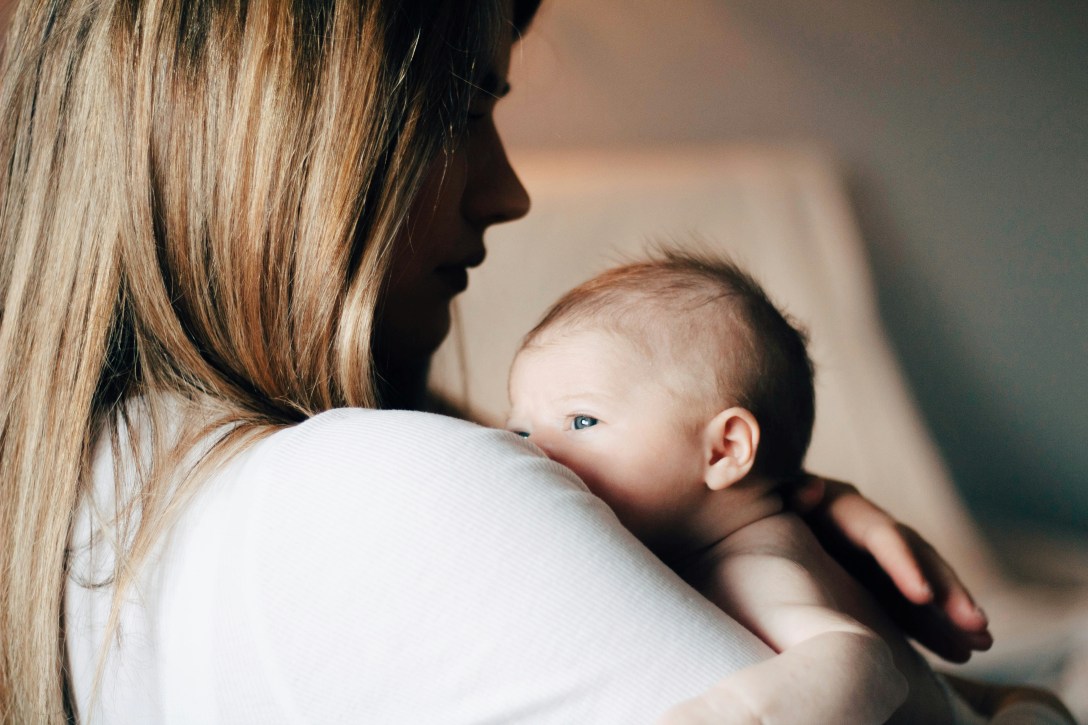
Have you ever noticed that every great act of redemption starts with a childless woman?
The obvious one is that Jesus’ story starts—in Matthew and Luke’s tellings, at least—with Mary, before Jesus walks onto the page. We start with a young woman with no children, in her case an unmarried virgin.
While Mary is the most extreme ‘version’ of this, that’s because she’s the last of a line of them, the final story they were all nudging in the direction of. When the New Testament opens, its authors expect us to be steeped in the Old Testament. Of course, most modern Christians aren’t, so we miss the jokes.
If you asked someone who has read the Old Testament, ‘how is God’s next act of redemption to begin?’ They would look at the shape of the stories of what’s happened before. They would notice each story starts with a woman or women. None of them look exactly like Mary’s, but there is a pattern.
When David walks onto the stage as Israel’s great king, how does it start? Well, we’re in the books of Samuel, so the story starts with Samuel the prophet. Except it doesn’t, first we meet Hannah. Hannah is married but can’t have children, and Samuel is the gift given in response to her prayers, who she immediately gives back to the Lord. I suspect we underestimate the courage, fortitude, and faith required to do that.
When Moses walks onto the stage, he’s a tiny baby, and we’ve met his mother and the Hebrew midwives. Alongside Moses is young Miriam, his sister, who accompanies him to the princess of Egypt who raises him.
Abraham’s story swiftly introduces Sarah, who also cannot have children. Sarah isn’t young, but the ‘redemption’ given to Abraham is his forging into a great nation. That requires the birth of Isaac and the narrative hinges on a childless woman. We see the same shaped story play out with Rachel and Rebekah, at which point, three generations in, we’re watching for the pattern.
That’s the greatest hits of Israel’s redemption, but there are other examples to help us spot the pattern. The original ‘young woman’ in Isaiah’s prophecy, perhaps his own wife, (Isaiah 7) that the gospels say Mary is the true fulfilment of, bore a son who would reassure Ahaz, the king, that God would deliver his people from the Assyrians. This happens under Ahaz’s own son Hezekiah. Hezekiah is an ambivalent king, and yet among the best Judah has. Judah are saved from Sennacherib and exile through his repentance.
Ruth fits the same pattern, as does Samson’s mother. We see it in the Shunnamite woman and in Esther.
There’s a definite pattern that redemption starts with childless women.
Of course, I left out the first that they all thrum with the shape of. Eve, at that point childless and nameless, is told by God that her ‘seed’ will crush the serpent’s head. Each of these echoes with that story.
Reading Patterns
This is what reading with the grain of scripture teaches. We see patterns and start to think ‘is this like that?’ The cross echoes and completes the promise of each of these previous stories, the resurrection is the ultimate victory that all of their victories encompass.
It also means that each of these stories bears some of the features of the Exodus, we’re meant to notice that too. They all point to the cross, forwards, but they also all point backwards: to the promise to Eve, to the Exodus, and crosswise from one story to another. Typology is progressive, we read forwards, and its eschatological, it points to Jesus, and it’s a literary feature to be read in each direction. All of these slowly shed light on each story as we reflect on it.
Then we ask the meta-question. Once we’ve seen a shape and understood how the shape communicates story, we ask ‘why that shape in particular?’
Why a childless woman?
On a simple level it means that God cares for the deeply marginalised, those who find that is death where there should be life. That’s true, though we should remember its not always encouraging for those struggling with those issues as each of these women ends up with children.
We should try and read deeper too, why would God start with childless women? Because that’s who he came for. He came for his bride, the church, to make her fruitful. As Isaiah prophesies, the one once called desolate will be called ‘married,’ (Isaiah 62).
Our personal fruitlessness—and we all have some of that—is bound up in his fruitfulness. The weak and the low, the forgettable and unimportant, like a young childless woman, are exactly who Jesus came for. We can go further: they’re who he loves the most. Jesus loves the broken, the cast-aside, the has-no-hope, and the forsaken. He saw their plight and he chose to rend the heavens, setting his face like flint on a rescue mission like no other. He came for Mary. He came for Miriam and Hannah. He came for Sarah, Rebekah, and Rachel. He came for Ruth and Esther, and the women whose names we never learn.
He came for all the weak and weary. Which means, dear friend, he came for you. Because he starts with the childless woman you can be sure that he will reach to you. He is for you.
Photo by Hollie Santos on Unsplash
To subscribe and receive email notifications for future posts, scroll all the way to the bottom of the page.
Would you like to support my work? The best thing you can do is share this post with your friends. Why not consider also joining my Patreon to keep my writing free for everyone. You can see other ways to support me here.
 nuakh
nuakh 