It’s a dreary winter Saturday. Frost has limned the limbs of trees with a stark outline against the grey sky. The house is slow and lazy as we sleep and read and emerge into the world.
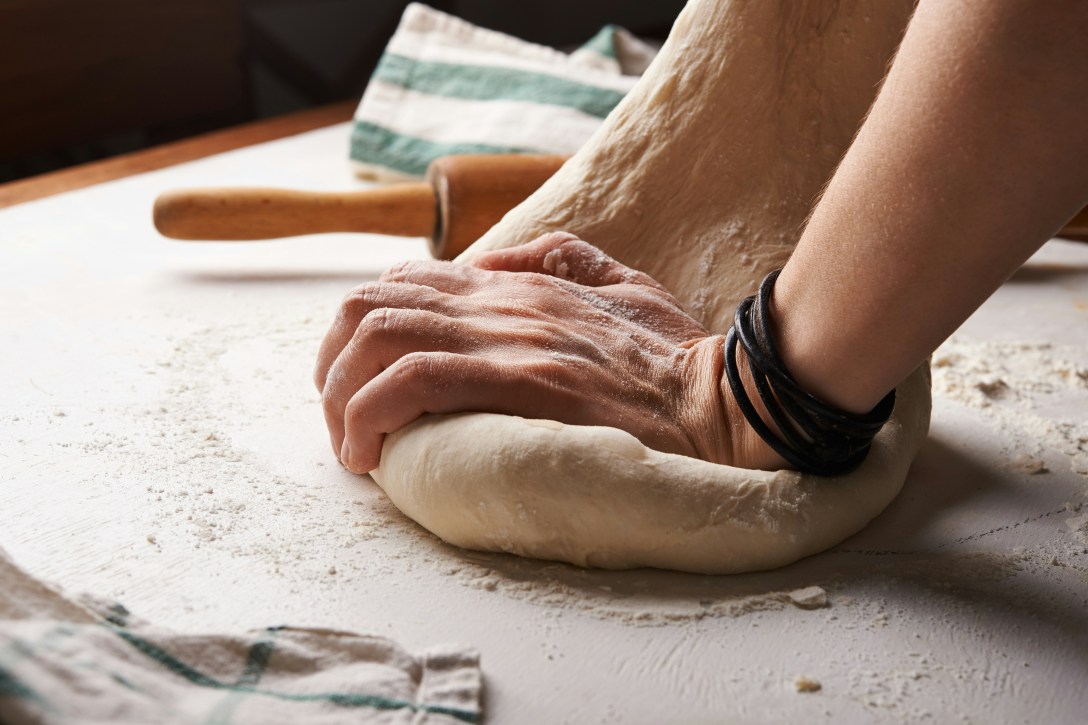
A small bowl of hastily made dough has been waiting overnight, doubling in size as it prepares itself for transformation. As lunchtime approaches, startlingly fast, a dutch oven is heated and the dough is baked—lid on, then off—until the crust is thick and the inside soft and tasting like the rough imitation of sourdough it is.
Soup is heated and served with a loaf of that most homely of things: bread. Then against the winter’s sapping of strength we are fortified by warmth and simple goodness.
Idyllic, at least in the telling. Though we repeat the ritual because it feels idyllic. There’s just something about bread.
The Bible feels similarly, there is just something about bread. Long before God identifies himself with it in the ritual we now call ‘communion’ or ‘the Lord’s Supper,’ there’s still an aroma to the narrative like freshly baked bread.
I feel like this is a biblical theme—along with its counterpart of wine—which is not considered often enough. There are few ‘biblical theologies’ which consider hospitality as one of the primary threads of the Bible. Fewer which chart bread and wine as key signs, symbols, metaphors, and ‘meanings you can eat’ throughout the Bible’s story. We should probably publish some more.
The story of bread starts in the garden, where food is given, and then in the expulsion from the garden, where suddenly we must work the ground by the ‘sweat of the brow.’ Bread is that most basic of foods, a simple gift from God, yet bound up in the curse. To make it is back-breaking for those who must work the land.
More than that, to make bread requires civilisation. Farming, in human development, is linked to the development of cities. Hunter-Gatherers don’t bake bread as they’re nomadic. To stay in one place and work the land is required to raise the grain that we bake our bread from. Bread, while much quicker and simpler to make than wine, still requires cities, in the broadest sense. This development of humanity to urbanisation, we would probably just say ‘civilisation,’ is bound up in bread itself. For God to speak through it gathers a collection of meanings.
Then the story continues, and there are many episodes I could select. I will just highlight the key contours of the story.
Some strangers turn up at Abraham and Sarah’s tents. Abraham throws a feast and they bake buns of bread to serve them quickly; hot and filling and delicious. Who among us hasn’t been satisfied by really good bread with really good butter? We’ve had the privilege of eating in some Michelin starred restaurants, and Helen would often claim that the bread is the best bit. It can be divine.
Abraham’s three guests prophesy the impossible birth of a child that causes such hilarity they call him ‘laughter.’ They also turn out, as the conversation continues, to be (or to include) Yahweh himself. When Jesus comes to tea, serve him bread cakes.
Fast forward several hundred years. The people are on the doorstep of escaping Egypt, ready to escape. They slaughter lambs and bake bread for the Passover, the feast of ‘unleavened bread.’ They make bread the un-Egyptian way, without the mother (the sourdough starter) to leaven it, and bake it fast and flat. They eat lamb and flatbreads, like an early gyros without the chips, ready to go on the run. When it’s time to go running to God he says ‘bring bread.’
Fast forward a few weeks. They are wandering in the wilderness, thinking that God told them to come running with bread so they could die. Instead, bread rains from heaven. This time a bread that is a sticky, flaky thing that they pick up off the desert floor, but they keep calling manna ‘bread.’ It doesn’t last, but neither does it have to be grown from the ground. It’s like bread without the curse, bread straight from the hand of God. It tastes like honey. They keep a small amount in a pot and put it forever before the face of God in the most holy place. This is the bread of gift.
They keep baking loaves to offer back to God for outside the most holy place too, twelve of them, covered in incense. God gives us bread, we give it back. That’s the hospitality of gift.
Fast forward a few more centuries. Elisha, that strange prophet, keeps encountering and bringing bread. Eventually God gifts bread from heaven in the guise of a fleeing army’s baggage train. A table is laid in the presence of enemies. It’s even the enemy’s bread. How does God demonstrate his grace, undeserved? With bread that belonged to those who hated him, given to the hands of lepers.
Then Jesus comes, born in the house of bread (‘Bethlehem’), a man who claims to be bread after multiplying it for thousands. A man who comes, like Elisha, eating and drinking. As his story ends, one of his biographers relates a time when he walked with two men along a road, without them recognising him. To be fair to them, he had just been publicly murdered. They eventually saw him as he broke bread before them. It’s in the bread that we see the gift of God.
What does God choose to describe his gift to all of us? The most simple thing in the world, staple food. A thing of the curse, made through labour, yet given from the hand of God. Transformed from simple to sublime. Grace like the aroma of fresh bread wafting through my house, as the soup warms, and a knife saws its crust.
Grace that says on a winters’ morn, ‘this too is for you.’ Grace that transforms the ordinary into pure gift. Grace like bread.
Photo by Nadya Spetnitskaya on Unsplash
To subscribe and receive email notifications for future posts, scroll all the way to the bottom of the page.
Would you like to support my work? The best thing you can do is share this post with your friends. Why not consider also joining my Patreon to keep my writing free for everyone. You can see other ways to support me here.
 nuakh
nuakh 