Jesus in the Tabernacle IV
After the lampstand, the instructions given to Moses turn to the tabernacle itself, the tent in which ark and table and lampstand are placed.
It’s made of ten curtains, with entwined blue and purple and scarlet yarns, woven with fine white linen. It’s made a very specific size. The intricacy of its construction is carefully laid out in Exodus 26.1-36. Within this tent a thick curtain is made, of the same three colours, with cherubim worked into its tapestry. It stands to separate two thirds of the tent, the Holy Place, from the final third, the Most Holy Place.
We’re then given instructions for where the table and lamp go, on either side of the tent. A special screen is made for the entrance, in the same colours again.
A little later another set of hangings are made (27.9-19) to construct a large courtyard outside the tabernacle—though we turn between them to consider the Altar that stands in that courtyard.
Everything is carefully arranged and specifically made of fine materials, and of bronze and silver. The gold is kept for inside the tent.
Why those colours
The terms aren’t the easiest to follow and they probably don’t align to the colours you immediately picture. It’s likely that they refer to particular pigments made from natural materials (a plausible suggestion is that they are in turn, a light blue from mollusc glands, the classic ‘Tyrian Red’ royal purple known from Roman Emperors, and ‘worm crimson’ from particular insects). These are expensive dyes from all around the Mediterranean, they’re the goods of Empire. Presumably the Hebrews brought dyes out of Egypt with them along with their wealth of plunder.
There are some symbolic resonances, but we should consider that rich, costly cloth and thread is being used to construct the tent. Where we worship God is adorned with cost.
This is an intuition which perhaps cuts the opposite way to many modern church aesthetics, which can look like conference centres. We should consider the beauty of where we worship God, even if that’s the simplicity of classic Protestant architecture.
More than that though, the tabernacle is a copy of the heavens on earth, its woven with the costliest of materials because where God dwells is beautiful. The church, by which I mean the people rather than the building of the same name, are woven with the costliest of materials. That’s where Jesus wants to dwell. How do we know that’s true?
Tabernacled with us
When John waxes lyrical in his prologue about the word made flesh he tells us that he ‘dwells with us.’ The Greek word means he ‘pitched his tent’ or ‘camped’ with us. Jesus is a walking, talking tabernacle. He wants to dwell in the dust with his people. He still does. The ascended Christ is ruling and reigning over the world, but he dwells with his people by his Spirit. We are the riches he chooses to adorn himself with.
I wonder if we don’t think enough about the church as Jesus’ dwelling place. This tent is where God is. The Church is where God is. The New Testament uses temple imagery rather than tabernacle imagery to describe the Church (e.g. 1 Peter 2), but the Temple is just the Tabernacle glorified. The Church is the Temple glorified. Jesus is also the glorified tabernacle/temple, but the Church is Jesus’ body so that particular metaphorical snarl resolves itself if you sit with it for a bit.
We should consider the church, particularly your local church gathered to worship next Sunday, as the place that Jesus chooses to dwell. It’s adorned with beauty. Last Sunday I was in a Church meeting in a hideous, drafty, sports hall at the back of a secondary school. There were no aesthetics. Does this compare to cloth of the finest make from all across the known world? It does, because the threads of mollusc-blue, royal purple, and worm-crimson are the people around you. They are the beauty in which Jesus chooses to take up residence. They are the costly, royal, fabrics with which he weaves wonders.
Eden’s Echo
There’s an echo of Eden here too. The tabernacle is worked with embroidery, though we aren’t told what kind. The Temple later is decorated with trees and plants to look like a garden, that may be true here too. The one image we are told about is the cherubim on the covering for the most holy place. We are meant to think of the cherubim at the entrance of Eden’s garden, who stand with the flaming sword to prevent the first humans from re-entering.
As an echo then, the most holy place is Eden’s garden. Perhaps the wider holy place containing the bread and almond tree lampstand is the land of Eden. The outer courtyard is then the rest of the world. This is the three-layered view of the earth presented in Genesis 2, and it fits with the instinct that the tabernacle is a model of the world. The presence of the ‘sea’ in the courtyard helps to reinforce this, though I’ll discuss that when we reach the laver.
God dwells in an unapproachable garden. Yet on the day of atonement the high priest can go through the veil into the very presence of Yahweh, his passage secured by sacrifices of atonement and ascension. The book of Hebrews is at pains for us to see that Jesus Ascension is his passing through the veil of the heavens for us, into the true most holy place of the heavenly temple, there to live and plead for us as our great high priest.
When the church gathers to worship, we follow him. We skip past the cherubim because the once-for-all blood of Jesus covers us and we are bidden ‘welcome’ by the Father. I like to imagine that the terrible cherubim, guardians of God’s sanctity, have their faces split into grins as the children of the most high caper into worship like little children in a place of great hush. As we shout our psalms and songs of praise, the heavens descend to the earth, and we find ourselves ‘caught up’ into the life of God himself.
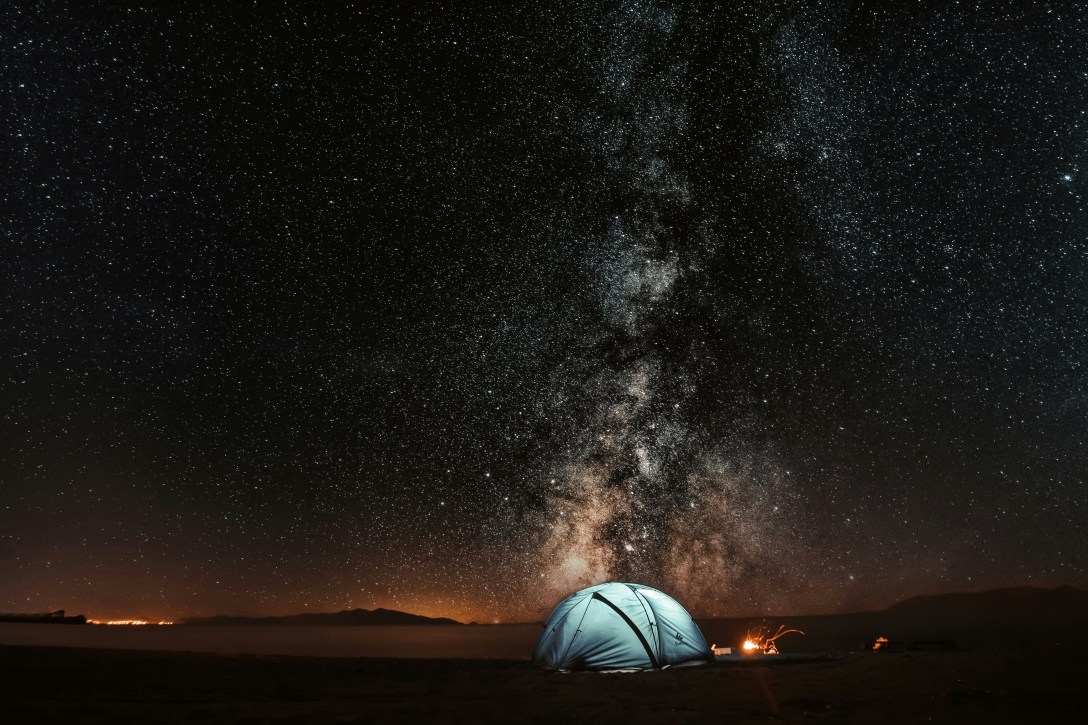
Photo by Pars Sahin on Unsplash
To subscribe and receive email notifications for future posts, scroll all the way to the bottom of the page.
Would you like to support my work? The best thing you can do is share this post with your friends. Why not consider also joining my Patreon to keep my writing free for everyone. You can see other ways to support me here.
 nuakh
nuakh 